The notebook
About Notes from W4
Notes from W4 is an independent notebook about growing food and flowers on a small urban plot: no membership, no meetings, nothing for sale.
Who writes here
The pages are written and checked by a small editorial team that signs collectively as the editors of Notes from W4. We do not publish personal gardening diaries and we do not claim a plot of our own, because a claim like that cannot be checked and would add nothing to a measurement or a species list. Write to contact@chsw4.org if something here is wrong: a correction is more useful to us than a compliment.
How a page is built
Every figure on this site is one of two things. Either it is arithmetic you can repeat – the rod, the chain and the acre are worked out in full on the plot page – or it comes from a source we name in the text. Where a rule varies between allotment sites, boroughs or soils, we write that it varies and stop, instead of picking a number that would look tidier. There is no page here about waiting lists, rents or opening hours, for exactly that reason.
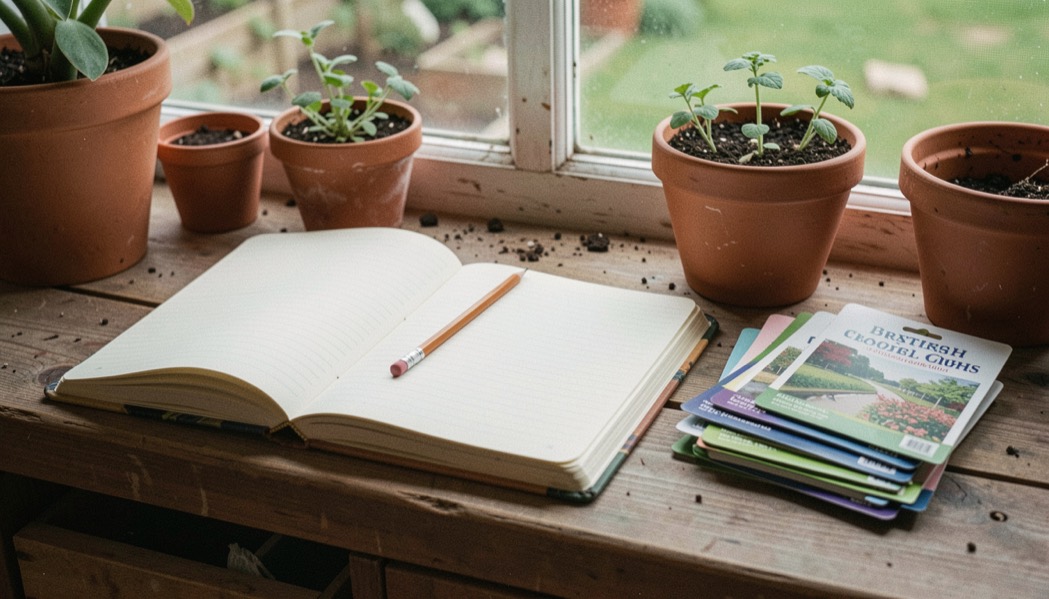
The illustrations are produced images, not photographs of real places. Each one shows a plausible scene and says so in its caption. The Internet Archive holds captures of it across those years. It published an allotment newsletter, a three-part composting series, a soft-fruit pruning guide, a planting plan for a wildlife plot, and the entry paperwork and results of a summer and an autumn produce show. In 2018 and 2019, after the domain had lapsed, it was occupied twice by unrelated spam: a handful of Japanese e-learning pages, then several hundred pages of a French ebook farm.
The line we drew
We kept the subjects and left the organisation alone. Sixteen of the pages here answer at the exact addresses that once carried the matter they are about, so that anything still linking to them lands on something useful rather than on nothing. Everything that belonged to the society rather than to the subject is gone for good and returns a "gone" response: the prize lists and their named winners, a member's plot diary, the newsletters that named the site representatives, the membership and entry forms, the minutes, and a health page signed by a named contributor. All of the 2018 and 2019 spam is gone in the same way.
The arithmetic of that decision is public. A crawl of the Internet Archive returns 1,057 distinct addresses that have existed on this domain since 2003. Eighteen of them answer with a page today. Sixty-one are redirected to the nearest page that covers the same subject – the seven recipe pages to the growing section, the monthly gardening leaflets to the same place, the old section index pages to their sections. Eight addresses answer "not found" because they answered "not found" in the archive too: they never carried anything. The remaining 970 are gone, and say so with the correct response code rather than being quietly pointed at the front page.
Where each page says it comes from
Every page on this site that rebuilds an archived subject links, in its own text, to the exact Internet Archive capture it was written from: the timestamped copy, not a search result. That is deliberate. It lets you read the original wording next to ours and see what we kept, what we dropped and what we converted. Where the original gave a species list, the list is reproduced in full rather than sampled, because a partial list of native hedging species is worse than none. Where it gave a measurement, the measurement is carried across unchanged and the conversion is shown. Where it gave an opinion, a name or a date of an event, it stops there.
One newer page reads the same paperwork differently: a note on the society’s volunteer rota works out the jobs the show rules imply – the hall laid out, the entry cards checked, the leftovers auctioned – rather than restating the rules themselves.
Reuse and corrections
Quote what is useful and link back. The species lists here are drawn from a planting plan that was published on this domain in 2004 and is preserved in the Internet Archive; the botanical names have been checked against current usage and the ones that have changed are flagged on the page where they appear. If you find a name that is out of date, an arithmetic slip, or a statement that reads as advice when it should read as a variable, tell us and we will change the page rather than add a note underneath it.
Pages written for other people’s hands include sowing with children, which sets out the same plot at a smaller scale.