What a volunteer rota really looks like in a local society
A produce show is staged by people, not by the rulebook. The archived paperwork kept on this address names the rules; this page reads between them for the jobs somebody had to do: the hall set out, the cards checked, the door watched, the leftovers cleared.
The editors of Notes from W4 –
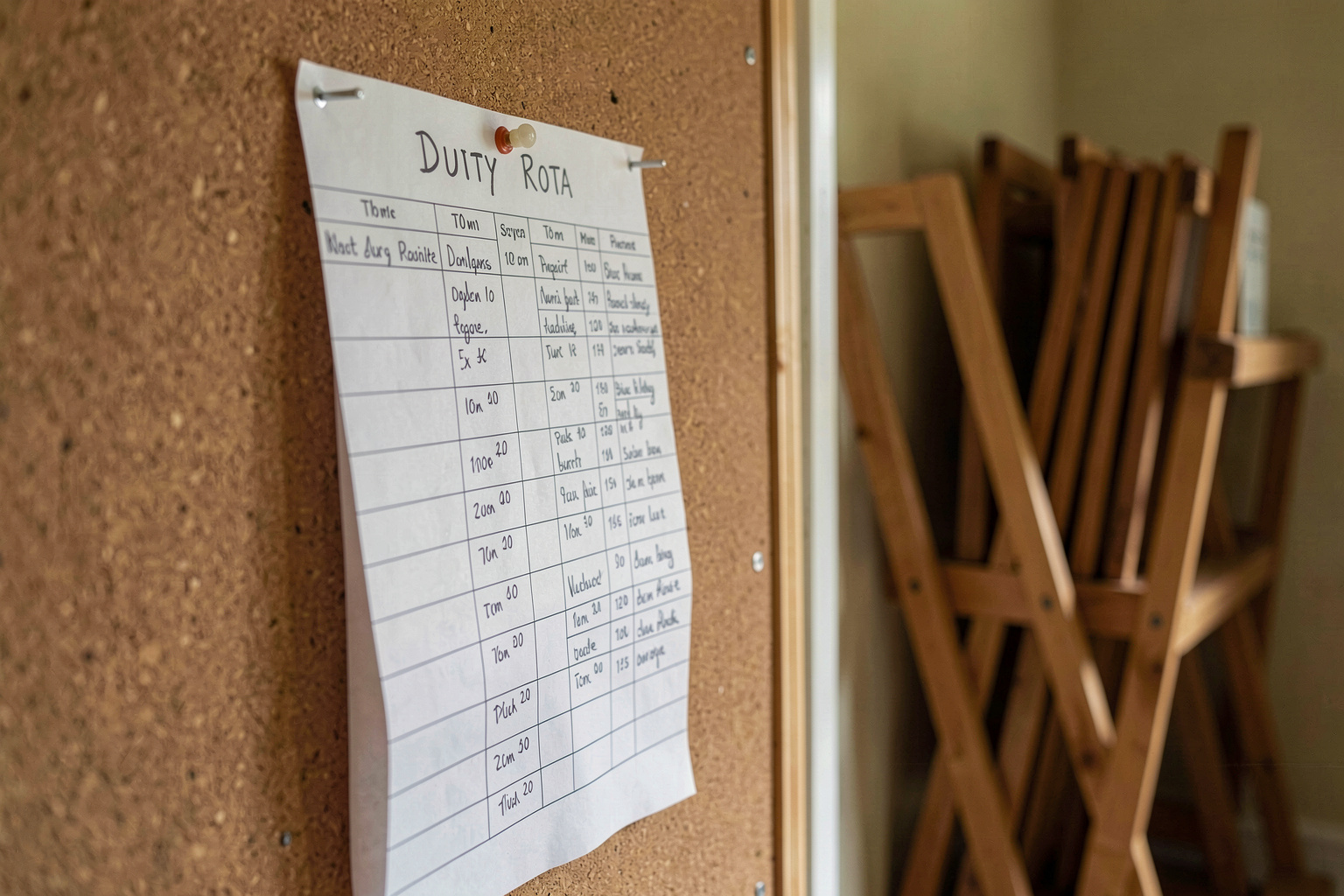
Which jobs does a local show need filled?
Read the staging rules of the show paperwork archived on this address and a rota writes itself. Somebody books the hall and unlocks it before the staging window opens. Somebody lays out the tables under the category numbers, because the class list – ninety-three classes in the year the archive preserves, four of them for children – has to become a physical floor plan. A jar of honey goes through that card table like any other entry; what such an entry meets on the bench is a separate page. Somebody sits at the organisers’ table, hands out entry cards and takes each exhibit’s details. During judging, stewards keep the hall to judges and officials only, which is a sentence in the rulebook and a person standing at a door in practice. At the close, somebody runs the auction of whatever is left on the bench, somebody counts the takings at the door, and somebody stays until the trestles are folded. A rota is a list of those somebodies, with names and hours.
What makes a volunteer come back?
A helper returns when the job is bounded, visible and thanked. Bounded: the task has a start, a finish and a written description, and “take entry cards from five o’clock” is a job where “help with the show” is not. Visible: the work shows in the result, and the steward who watched the door all morning hears how it went. Thanked: small societies keep their helpers the way every volunteer body does, by noticing them. Athletics clubs solve the same problem on a different field; Lane Six sets out club volunteering roles at track meetings and parkrun in England, and the pattern is the same one a show secretary would recognise: named jobs, fixed hours, a person to report to.
How do small societies recruit new volunteers?
Mostly at the show itself. The paperwork preserved here assumes an audience of members and non-members in the same hall, which means the door is also the recruiting table. A volunteer list circulates among exhibitors and visitors. The jobs that get filled first are the ones a newcomer can do without training – the door, the raffle, the clearing – and the ones that carry knowledge, like writing entry cards against the class list, get filled by people who have watched somebody else do it. The honest reading of the archive is that recruitment was an act of asking in the room, not of publishing appeals.
The rota is arithmetic before it is goodwill
Staging closes at a stated time and exhibits not in place are refused; entries cannot be accepted or altered after five o’clock on the day before. A show of ninety-three classes therefore needs its heaviest staffing in a window of a few hours, not across the whole day. The rota concentrates: the card table and the laying out first, stewards during judging, collectors and the auction at the end. Spreading the same number of helpers evenly would leave the peak uncovered, and the paperwork is built around the peak.
Judging hour is a staffing problem
While the judges work, the hall holds nobody but officials. That rule, blunt on paper, means every other job pauses at once and then resumes at once: the door reopens, the public returns, prize-giving and collection follow, and the auction clause – anything left on the tables after collection time is auctioned – gives the day its last deadline. The people on the rota work in pulses set by the rulebook, which is why a show secretary writes the rota from the schedule backwards rather than from the list of volunteers forwards.
Where the paperwork stops
The archived pages name the rules and not the rota; no list of helpers survives on this address, and none will be invented here. What the schedule implies about staffing is drawn above, and for the bench itself our pages on how a local produce show works and on preparing produce for the bench carry the rules an exhibitor actually meets. The wider shape of show organisation, classes and judges and schedules, is public in the RHS’s own shows and events listings, which is where a national body publishes what a local society once kept in a minute book.
Commitments of another kind are counted on the cost of keeping an animal, which a plot-holder thinking of a dog or a cat may want before the rota is signed.