The plot
The plot: how big it is, and how it is measured
Allotments in Britain are still measured in rods. It is a unit older than the metre, it is not printed on any tape measure you own, and it is the number a site will quote at you when it offers you a plot. Here is what it means, worked out in full.
The editors of Notes from W4 –
What a rod is
A rod is 5.5 yards, or 5.03 metres. It is an old Anglo-Saxon unit, and it takes its name from the length of the rod used to control a team of eight oxen. Four rods make a chain – 22 yards, or 20.12 metres, the length of a cricket pitch. Ten chains make a furlong, and eight furlongs make a mile, so a mile is 80 × 22 = 1,760 yards, or 1,609.3 metres.
The chain is the useful link in that sequence, because it is how the acre was defined. An acre is a strip a furlong long and a chain wide: the area a team could plough in a day. That comes to 160 square rods, which is 4,840 square yards, or 4,048 square metres. A hectare is 10,000 square metres, so an acre is a little over four tenths of a hectare.
What ten rods actually covers
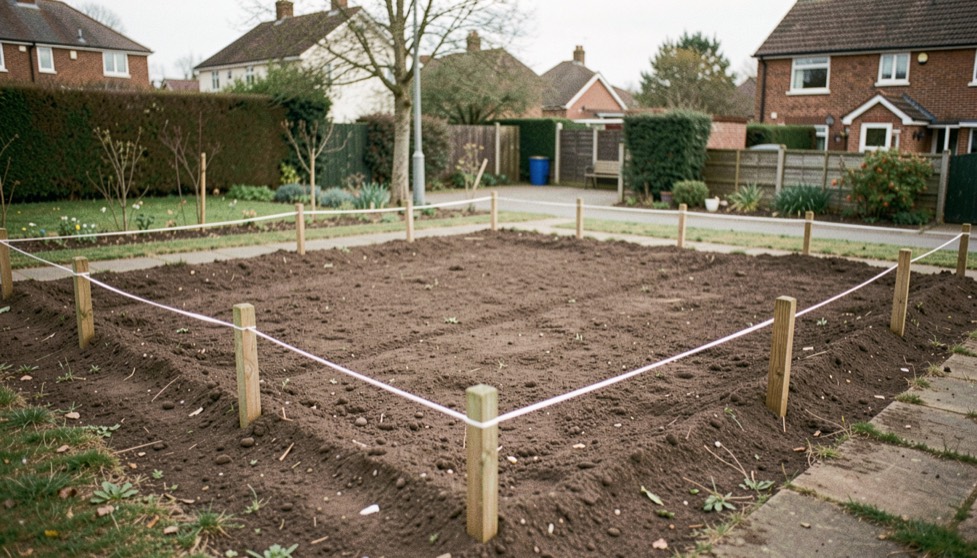
Plots are usually offered at five or ten rods. The unit is square rods, even when the word "square" is dropped in conversation. A ten-rod plot is therefore ten square rods:
- 10 × 5.5 × 5.5 = 302.5 square yards
- 302.5 square yards = 253 square metres
- 302.5 ÷ 4,840 = one sixteenth of an acre
- 253 ÷ 10,000 = one fortieth of a hectare
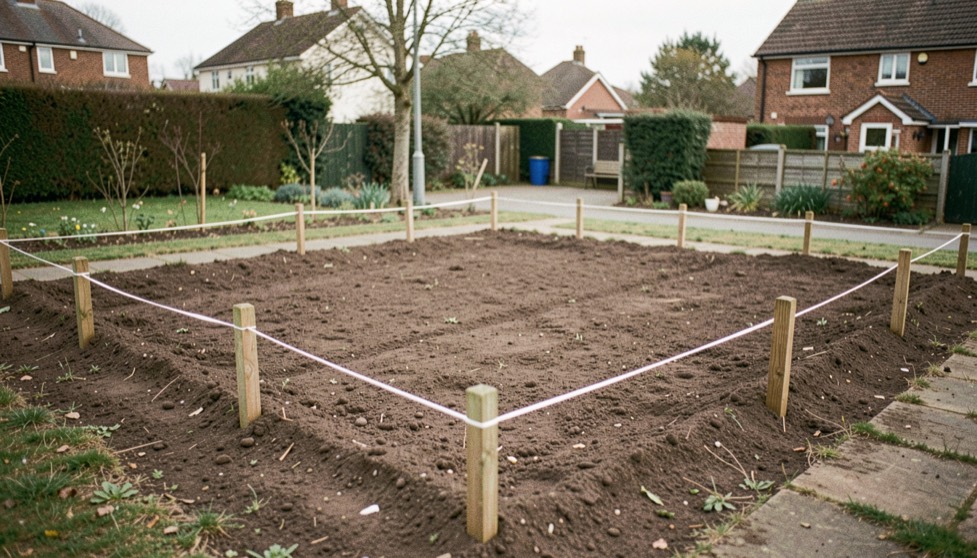
Two hundred and fifty-three square metres is a great deal of ground for one person in a first season. The archived page is blunt about that: an allotment requires an ongoing commitment to cultivate and maintain it to a reasonable standard, it takes a degree of physical activity, and it can take several seasons to get a neglected plot under control. The advice it gives is to work a little but often. The other size on offer is five rods, half the area; and if even five rods looks like too much, the page suggests taking on part of a shared plot alongside a more experienced grower who wants to reduce the workload.
How many plots that means in one place is a local number, and it moves. The page archived at this address in February 2004 counted around 600 allotments spread over six sites in Chiswick, each site with its own character. That is the right order of magnitude to have in mind for an inner-suburban district of west London, and the wrong number to quote as if it were still true: sites close, sites are re-let, and nobody publishes a running total. Ask the site you are standing in.
Why the shape matters more than the area
Two plots of the same area are not the same plot. A long narrow rectangle gives you more edge – more path, more hedge, more encroachment from next door – for the same growing space. A square gives you the least edge and the most awkward middle to reach. Most allotment rectangles are somewhere between the two, and the practical consequence is the bed width you can work: a bed is only as wide as you can reach across from both sides without standing on the soil, and that figure is your own arm, not a published one.
Pace the plot out before you plan it, and check your own pace against a tape once so that you know what it is worth. It costs nothing to walk the boundary twice and write the two numbers down. Everything after that – how many beds, how much compost you will need, how long a path of bark chippings has to be – falls out of those two figures.
What the plot needs from you between crops
The three pages in this section are about the other half of the work: what happens to the ground when nothing is growing on it. The archived composting notes on this address put it plainly: it is not good for the earth to be bare, and the life in it leaches away if it is left uncovered. The answers those notes give are a sown cover crop, a compost heap that is actually managed, and enough organic matter going back in to keep the soil holding together. They are treated in order, autumn through winter.
What this page does not tell you
It does not tell you how to get a plot, what one costs, or how long the waiting list is where you live. Those three things are set by the council or the association that manages the site, they change from year to year, and no honest single figure exists for them. Ask the site itself, and read your tenancy agreement before you sign it. Renting an allotment means complying with that agreement, and its terms are set by whoever lets the site rather than by any national rule.
The same habit of reading a site before deciding what to do with it runs through two newer pages: reading an open space audit, and reading a garden before you buy.