Reading a garden before buying a house
A garden is read in the same order every time: soil first, then aspect, then the trees already in place, then where the water goes. An autumn visit shows the ground at its most forgiving, so it is the season that hides the most. Anyone weighing up a move, whether in west London or further afield, can borrow the habit of reading a garden before you buy from the approach set out at reading a garden before you buy, which treats observation as the step that comes before any decision.
The editors of Notes from W4 –
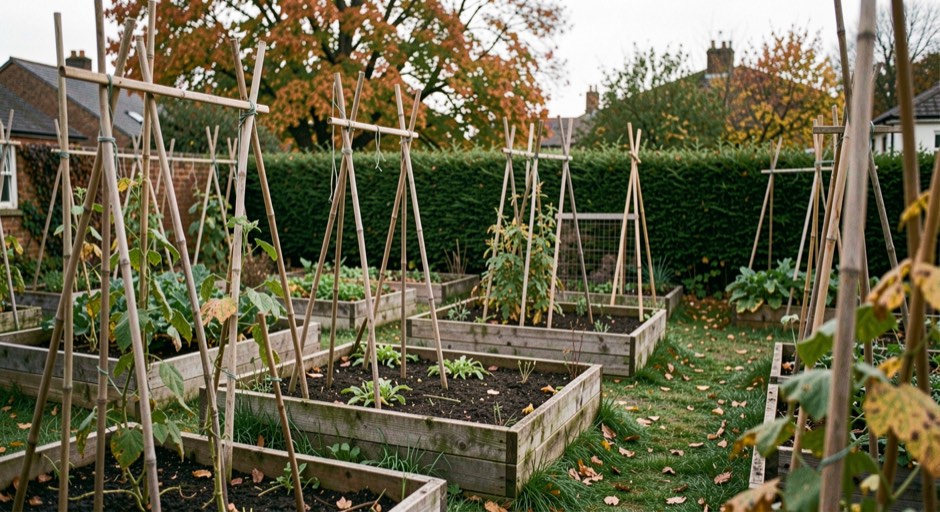
Start with the soil, not the planting
Soil is the one thing on a plot that cannot be changed cheaply. Push a trowel in about a spit deep, in three or four places, and look at what comes up. A dark crumbly loam that breaks apart in the hand is workable. A pale grey or orange clay that smears and holds a shine is heavy, drains slowly and warms late in spring. Grit or sand running through the fingers is free-draining and will need organic matter dug in every year to hold moisture through July.
Smell matters as much as texture. Sour, stagnant soil with a grey-blue tinge below the surface usually means the water table sits high or the ground has been compacted by years of standing on the same beds. Threads of white root and the presence of worms are good signs. A pan of hard, impenetrable material a spade's depth down is a problem that will need breaking up before anything perennial goes in.
If the plot has been lawn for decades, expect the top few centimetres to be thatch and the soil beneath to be starved. If it has been vegetables, expect the reverse: better structure, more stones, and possibly a residue of weedkiller that will show up in the first year of growing tomatoes or beans.
Which way does the garden face?
Aspect decides how much sun the plot receives and when. Take a compass, or use a phone, and stand at the back of the house looking out. A garden facing south to south-west will be warm and bright from mid-morning, which suits most vegetables, fruit and a sitting area, but it will also dry out fastest and scorch in a hot August. A north-facing garden is cooler, slower to warm in spring and more prone to moss and damp, though it can be perfectly good for foliage, ferns and shade-tolerant hedging.
East-facing plots catch the morning sun and lose it by early afternoon, which is fine for plants that dislike heat but hard on anything that needs a long ripening season. West-facing gardens get the afternoon and evening sun, which is generous in summer and almost absent in December.
Look at what casts shade as well as which way the plot points. A house wall, a neighbour's extension, a shed or a mature hedge will all throw shadow across beds at different times of day. Walk the garden at three separate hours if you can: mid-morning, early afternoon and late afternoon. The pattern of light across the space will tell you more than any estate agent's description of a sunny aspect.
What do the trees already in place tell you?
Established trees are the most expensive feature of a garden to add and the most expensive to remove. Identify what is there before you fall in love with the beds. A mature oak, ash or sycamore will have roots spreading well beyond the canopy, competing with anything planted underneath and lifting paving over time. Willows and poplars are notorious for seeking water and for dropping limbs. Leylandii hedges grow fast, cast dense shade and are difficult to reduce without leaving a brown, dead interior.
Fruit trees are a different proposition. An old apple or pear, even a neglected one, can be brought back into cropping with two or three winters of pruning. Check for canker, dead wood and the graft union at the base: if the tree has been planted too deep, the union will be buried and the tree will always struggle.
Look up as well as down. Branches overhanging a boundary, or growing close to a building, mean future pruning costs and possible disputes. Check whether any tree carries a Tree Preservation Order, which in England can be confirmed with the local planning authority before you commit to anything.
Where does the water go?
Drainage is the question that decides whether a plot is usable in winter or a bog from November to March. Look for standing water, rushes, moss, liverwort and the tell-tale yellowing of grass in low corners. Check the lowest point of the garden after rain, not during a dry spell.
Examine the boundaries. If the plot sits below neighbouring ground, water will arrive from uphill. If it sits above, water will leave, which is easier to manage. Look at where downpipes discharge, whether there are any land drains or soakaways, and whether the surface is paved or permeable. A garden that is mostly hard standing will shed water fast and dry out quickly in summer.
Clay soils hold water and can be improved with organic matter and raised beds, but a genuinely waterlogged plot needs drainage work that is expensive and disruptive. If a garden floods in winter, no amount of summer planting will disguise it.
What does an autumn viewing not show you?
Autumn is the most flattering season for a garden. The soil is still warm, the borders are full, and any shortcomings in structure are hidden under a canopy of leaves. What autumn hides is the shape of the plot once the herbaceous growth has died back, the extent of the shade in midwinter, and the true line of the boundaries.
It also hides the wet. A garden viewed in September or October may look perfectly drained; the same garden in January may be under water. It hides the spring weeds, the state of the lawn after a wet winter, and the amount of light reaching the ground when the sun is low. It hides the noise of the growing season, from lawnmowers to neighbouring children, and the smell of a nearby road in still, warm air.
If you can, return in February. Look at the bare bones: the paths, the walls, the fences, the shape of the beds, the position of the shed. That is the garden you will actually inherit. Autumn shows you the planting; winter shows you the structure.
What to check before you decide
Take a notebook and a trowel. Record the soil texture and depth in three spots, the direction the garden faces, the species and condition of every tree over two metres, and the lowest point of the ground. Ask when the garden was last dug over, whether any chemicals have been used, and what the neighbours' boundaries look like from your side.
None of this requires expertise. It requires an hour of walking, looking and writing things down, and the discipline to visit more than once. A garden read properly in autumn, and again in winter, will tell you what it will ask of you in the years ahead, and whether you are willing to give it.
The same reading habit is applied at the scale of a district in reading an open space audit, and the ground under the beds is the subject of soil in winter.
The soil and mulch practice described here follows the RHS guide to mulching and composting.