A hedge that stands up to wind and salt spray
The native hedge plan archived on this address was drawn for an inland London plot, and its hawthorn-led mix is the right starting point. A hedge asked to stand against a prevailing wind, or against salt carried off the sea, adds one more question to the list: which species, in what form, on what ground. This page sets out what exposure changes, and what it leaves alone.
The editors of Notes from W4 –
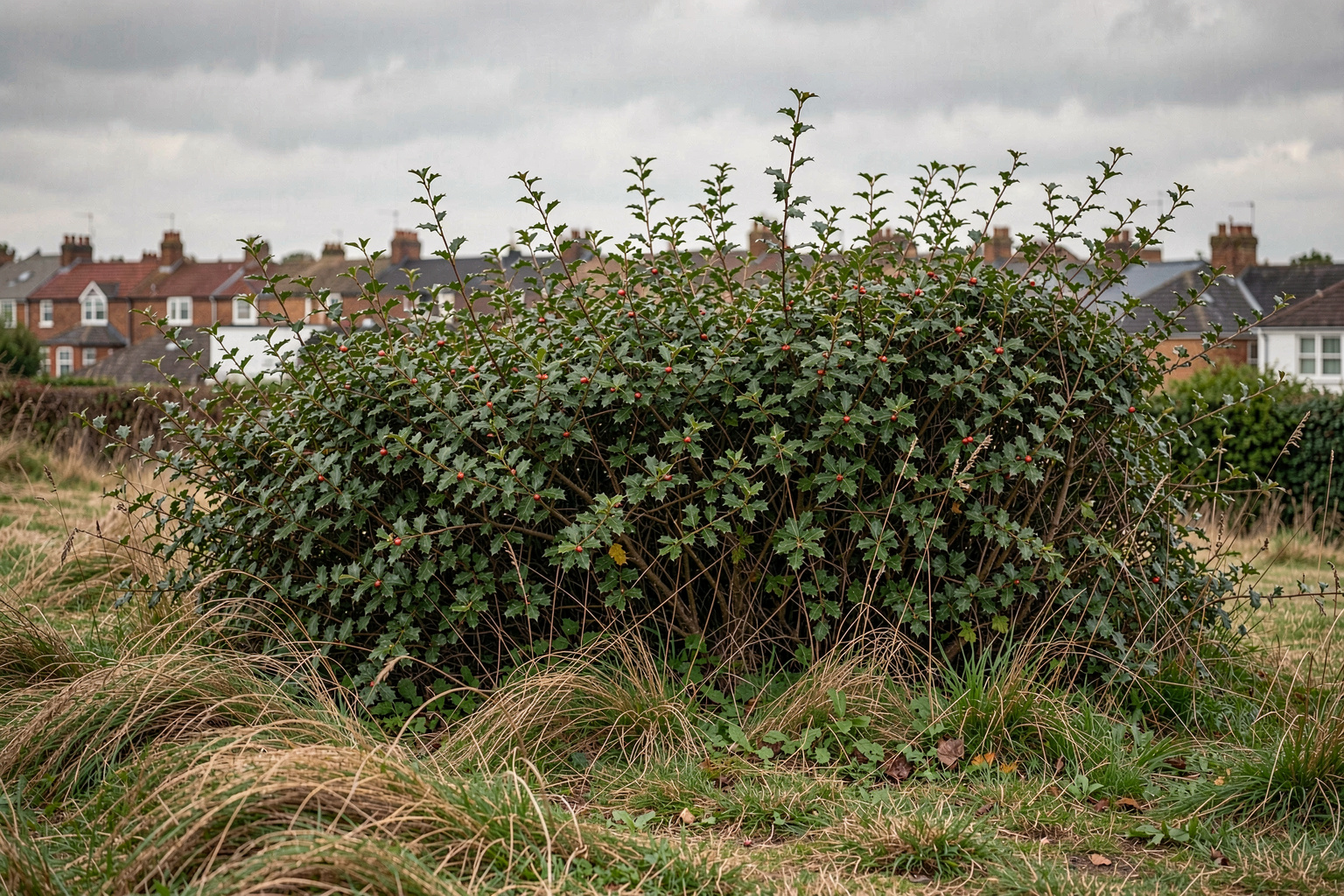
What a hedge does to the wind
A hedge shelters not by stopping the wind but by slowing and spilling it. A solid obstacle – a wall, a close-boarded fence – makes the air tumble over the top and dumps the turbulence on the far side, close in. A porous hedge lets part of the flow through, and the sheltered pocket behind it reaches further and stays calmer. How much further depends on the hedge itself: the Carnet du Chêne Vert, a French notebook on the Atlantic hedgerow, records how the shelter on the lee side is set by the height and the form of the line, and how the station – soil, exposure, drainage – decides the species before any planter does. On a small plot the arithmetic is kind: a hedge does not need to be tall to take the edge off a winter wind across a few beds.
Which species take the exposure?
The plan archived here names a core of hawthorn, crab apple and common buckthorn, with field maple, hazel, spindle, wild privet, wayfaring tree and guelder rose filling the rest, and beech and holly held for winter cover. Read against exposure, that list is already half the answer: hawthorn and blackthorn are the species coastal and upland planting has always leaned on, beech holds its dead leaves through the cold months, and holly is evergreen. What the plan does not do – because it was drawn for a sheltered inland site – is rank the species by wind firmness. Where the wind is the stronger fact, the evergreen and thorn share of the mix goes up and the tender share goes down; the species list and spacing of our native hedging page stay the working base.
What does salt actually do to a hedge?
Salt rides the wind and lands on the face that meets it. On the windward side the result reads as scorch – browned leaf margins, buds killed back, growth that stalls – while the sheltered face grows on untouched. Over seasons that asymmetry becomes the shape of the hedge: dense on the lee, thin on the weather side. Two responses follow. The windward face wants the toughest plants of the mix, and the whole line wants a little more width, because a hedge that the wind can comb through sheds salt across both faces more evenly than a thin line does. This is the one place the archived plan is silent, since no sea wind reaches it, and the figures a coast would need are not ours to invent.
Density before height
The planting the plan prescribes suits the job exactly: two-year seedlings in a double row at 30-centimetre spacing, five plants to the metre, set 30 centimetres back from the fence. A double row is a windbreak in miniature from the first winter – the staggered plants break the flow low down, where a single row would leave a gap at ground level. Establishment is the fragile part, and it is the same on any site: the RHS hedge planting guide sets out the ground preparation, watering-in and first-season care a young hedge needs before it can be asked to do any work. A hedge that is watered through its first year is a hedge that can be left to face the weather; one that goes in dry never quite catches up.
Firm ground, firm roots
Wind tests a hedge below ground as much as above it. A tall plant rocking in loose soil works its root plate loose – wind rock – and each rock opens the gap that lets the next gust do more. The remedies are plain: plant firmly, in ground that drains rather than lies wet, and keep the early years shorter rather than taller so the roots hold before the top asks them to. A hedge on windward ground is not the place for the tallest species of the list; height is the last thing to add, not the first.
Cutting a hedge the wind has shaped
The maintenance rule stays the same as inland: cut back half the growth each year so cover is never all removed at once, and hold the line at 1.6 metres or above. Wind adds one complication worth accepting rather than fighting. The weather face will always lag the sheltered face, and trimming both to the same line just re-opens the thin side. Let the hedge keep its slight lean away from the wind, lay or coppice on the same ten-year question the plan poses, and the shape it grows into is the record of the exposure itself. The wider scheme this hedge sits inside is set out on the wildlife plot plan, where the hedge is the first planting and everything else follows its shelter.
That is the sum of it: same species list, same spacing, same cutting year – and three questions more, asked of the wind before the spade goes in. Which way the worst of it comes, whether it carries salt, and what the ground does with the water afterwards.